Engineered for architectural integration, seamless stage design, and synchronized volumetric lighting installations.
In the contemporary architectural and entertainment landscaping sectors, kinetic light spheres and dynamic pixel matrices represent a tectonic shift from static illumination to immersive spatial volumetric art. No longer constrained to simple single-point emitting sources, modern optical spheres combine DMX512/Art-Net control protocols, precise motor mechanics, and custom acrylic or polycarbonate diffusion shells.
This industry whitepaper explores the critical procurement strategies, technological manufacturing advancements, and global supply chain dynamics shaping the sourcing of Wholesale Light Spheres. For enterprise integrators, spatial designers, and Global 500 entertainment corporations, understanding the engineering capabilities of production clusters in Guangdong remains a foundational step toward executing flawless structural, lighting, and interactive visual installations.
Modern wholesale light spheres are governed by three primary pillars: optics, kinetic mechanics, and digital protocol compliance. Commercial projects require high luminous efficacy, consistent chromatic performance (measured across CRI and TM-30 indices), and long-term durability under constant operation.
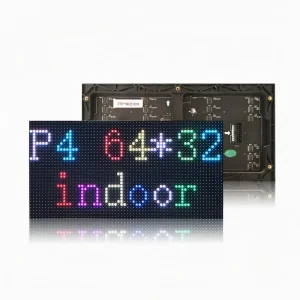
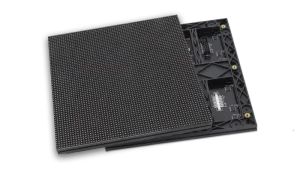
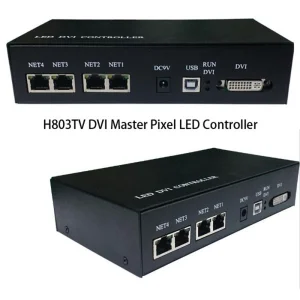
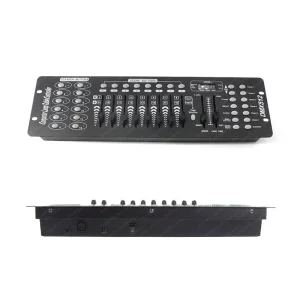
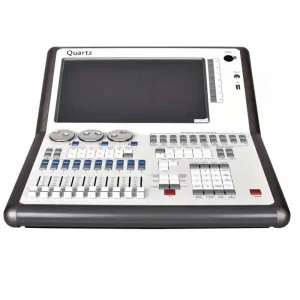
Integrating complex matrix schemes, such as DMX/Art-Net master controllers, allows designers to map lighting animations across three dimensions. By using advanced controllers (e.g., the OEM H803TV with Madrix integration), technicians can feed live HDMI or DVI data into LED module arrays, outputting low-latency 3D volumetric movement.
Diffusion spheres are exposed to UV degradation, thermal load, and mechanical stress. The adoption of impact-resistant, non-yellowing acrylic (PMMA) or polycarbonate (PC) ensures even, shadow-free dispersion of light. High-transmission ratios yield brighter spatial outputs while concealing internal LED hot spots.
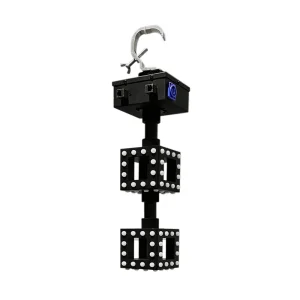
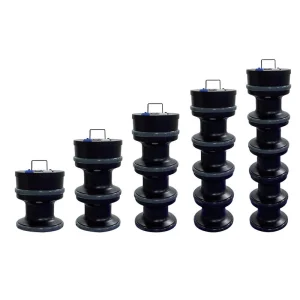
Moving lighting displays (Kinetic Lights) rely on sophisticated motor winches. Safety features, such as redundant structural wire lines, overload protection sensors, and microsecond-latency emergency braking mechanisms, are critical requirements for public venue compliance.
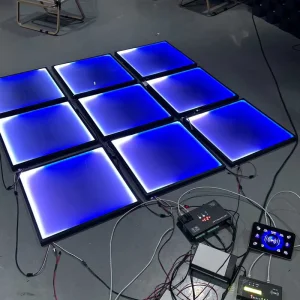
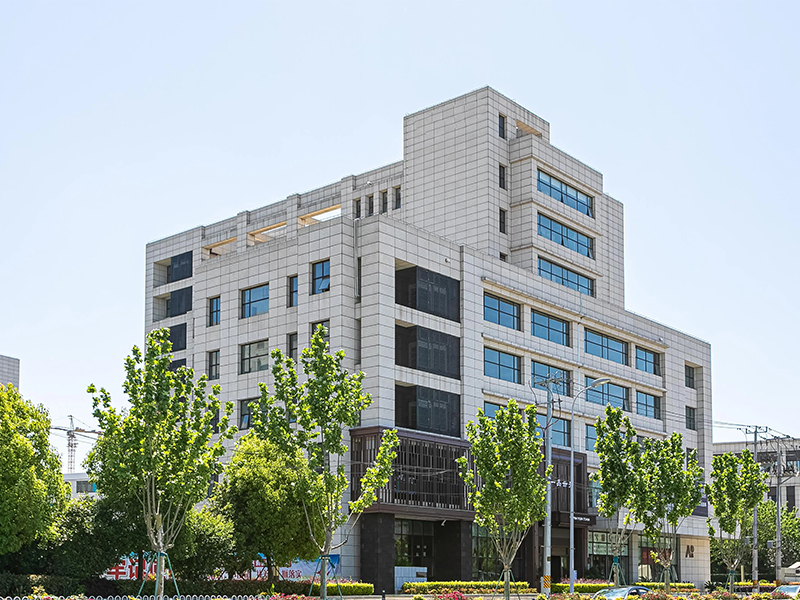
Founded in 2019 by the visionary duo Mrs. Ami Q and Mr. Ahren Z in Guangdong Province, China, Xiaosan has established itself as an innovative, high-tech B2B lighting factory. Specializing in advanced stage fixtures, lifting spherical lights, kinetic displays, LED dance floors, moving heads, and custom 3D design rigs, Xiaosan bridges the gap between creative visual layouts and mechanical reality.
Operating a modern, specialized 1,000-square-meter facility, Xiaosan deploys advanced surface-mount (SMD) pick-and-place lines, specialized structural assembly stations, and exhaustive quality assurance processes. The factory's core workforce consists of 30 experienced, long-term employees, representing some of the sector's top minds in firmware programming, mechanical winch load calculations, and optical thermal management.
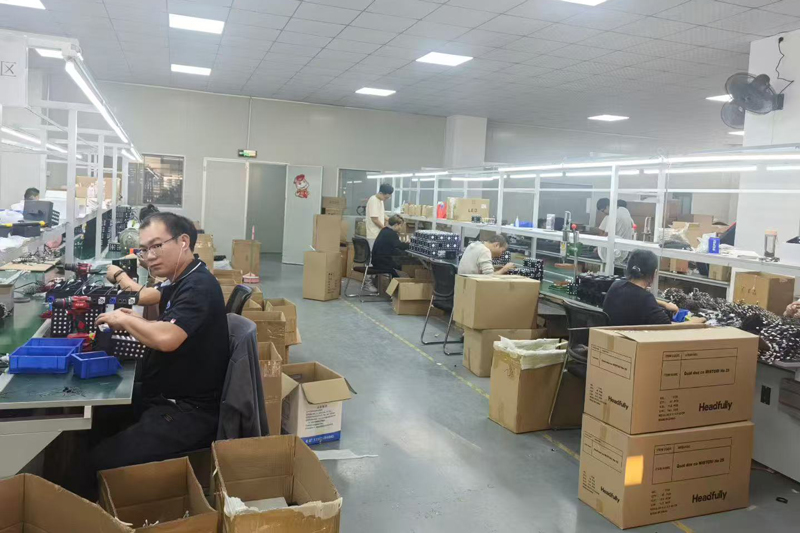
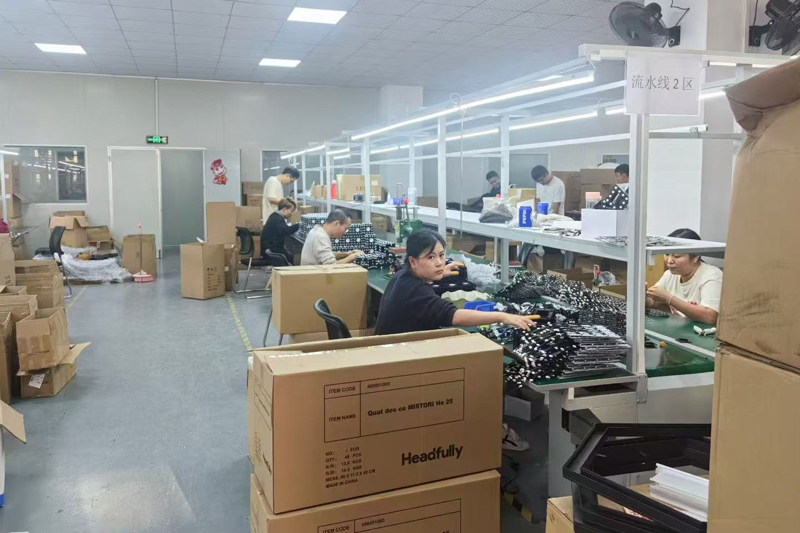
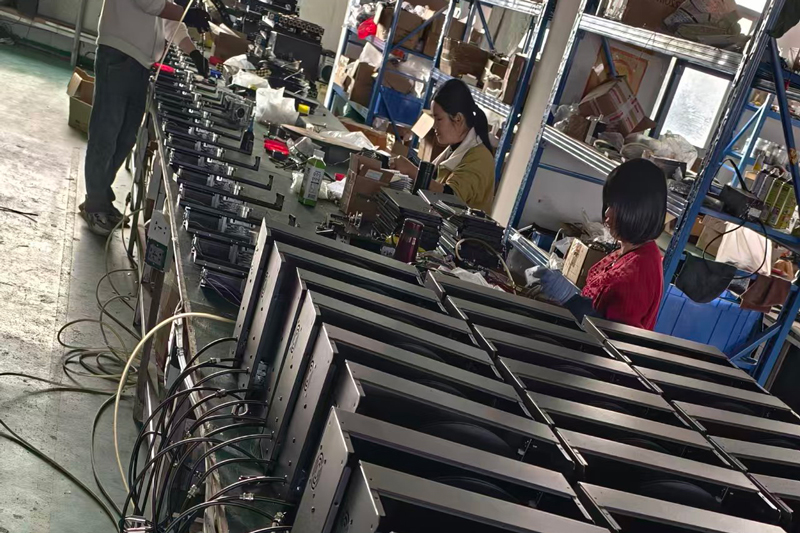
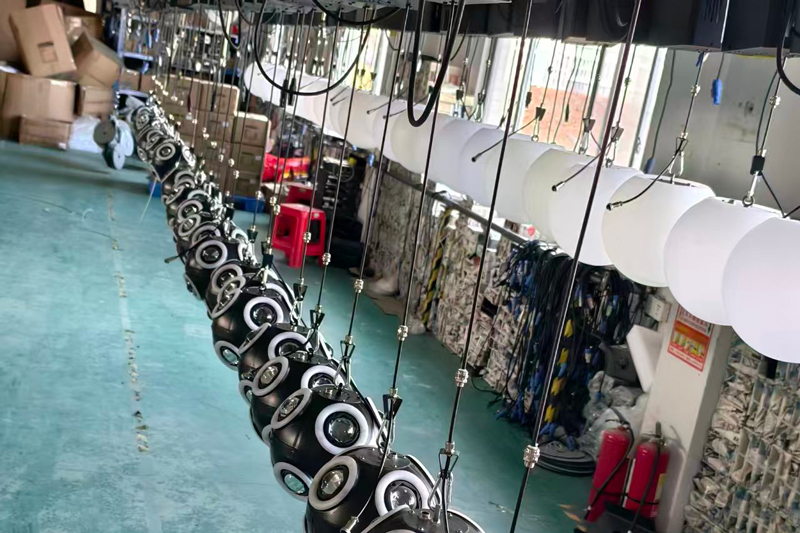
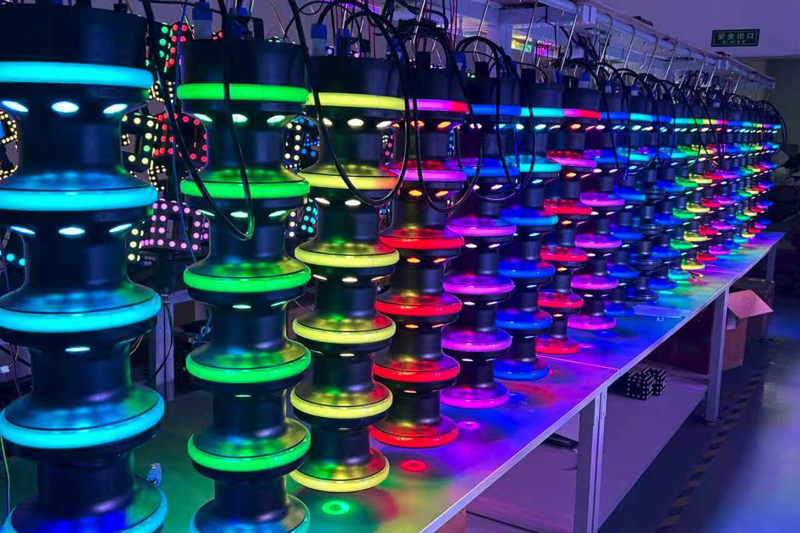
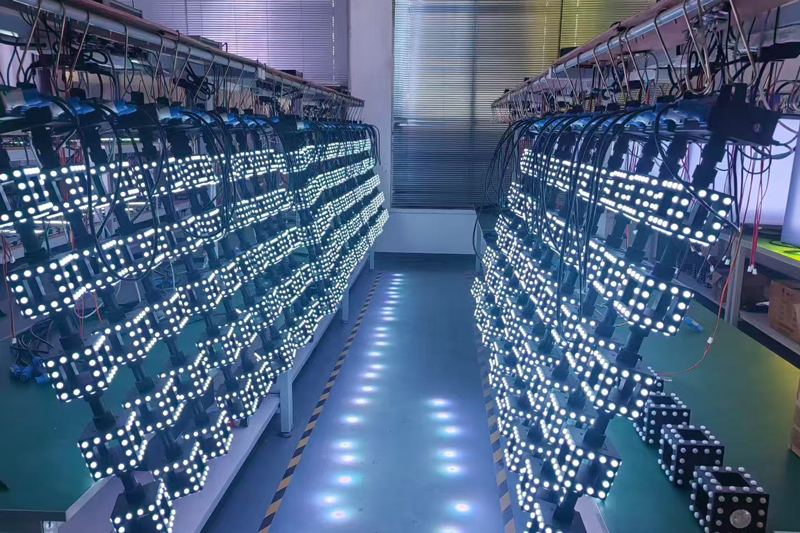
Unlike assembly-only vendors, Xiaosan provides true one-stop services. This includes physical mechanical R&D, customized 3D design mapping, integrated control layout engineering, and field calibration. Our robust post-production frameworks are reinforced by an industry-leading three-year warranty, guaranteeing low downtime, consistent light levels, and continuous technical support for global installers.
The manufacturing ecosystem of Guangdong Province operates as the global epicenter for optoelectronics and kinetic technology. Sourcing light spheres directly from this region offers significant advantages in lead-time reduction, cost-efficiency, and customization capability.
1. High-Density Component Sourcing: The physical proximity of IC packaging, LED diode encapsulation, mechanical gear shaping, and aluminum extrusion facilities allows for rapid prototyping. Design modifications that might take months elsewhere can be executed, safety-tested, and readied for production in days.
2. Stringent Quality-Control Protocols: Leading factories implement strict screening practices, including high-temperature aging chambers, vibration tests to simulate transport stresses, and automated optical inspections (AOI) to verify color uniformity and prevent pixel failures before shipment.
3. End-to-End Control Engineering: High-end Chinese manufacturers do not simply construct structural elements. They design the signal routing frameworks, program custom DMX profiles, and test DVI, DMX, or Art-Net controllers under maximum load conditions. This ensures that when the equipment arrives on-site, it acts as a plug-and-play network with minimal integration latency.
Light spheres and volumetric LED displays serve a variety of commercial functions. Below are key ways international architectural planners and installation companies use these components.
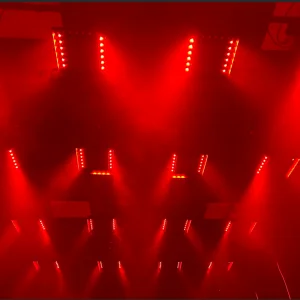
By suspending hundreds of kinetic spheres linked to computerized winch arrays over dance floors, venues create synchronized ceiling movements. Using online software interfaces (such as Madrix or Resolume), programmers design dynamic aerial waves, color shifts, and geometric patterns that respond in real time to the audio beat.
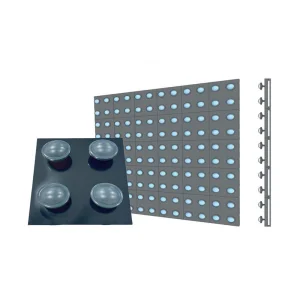
Large-scale architectural voids, such as multi-story hotel lobbies and shopping mall atriums, utilize pixel-mapped sphere matrices as digital art installations. These installations display low-energy ambient visual art during the day and transition into programmed light shows at night, increasing foot traffic and dwell time.
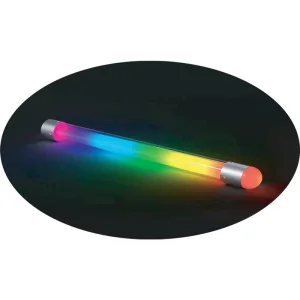
Trade show developers and theme park designers use custom lighting shapes—such as LED Rubik's Cubes, 3D Gourd Lights, and pixel wave lines—to draw crowds to specific zones. The durable construction resists dust, vibration, and continuous cycles, making them highly reliable choices for high-traffic environments.
Answers to key technical, logistical, and design integration questions from global engineering partners.
Ensure low-latency control and visual consistency across all installations with high-end controllers and custom fittings.
 Xiaosan Light