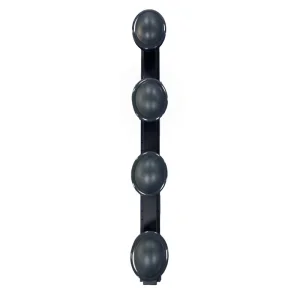
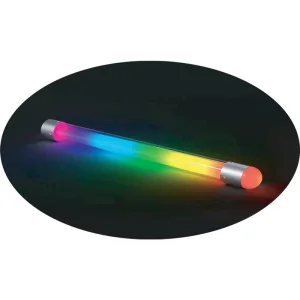
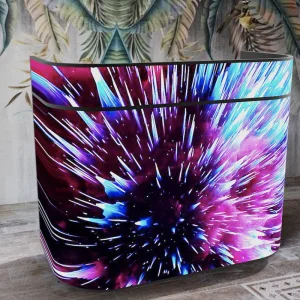
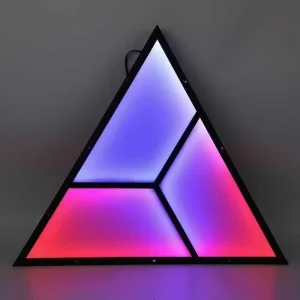
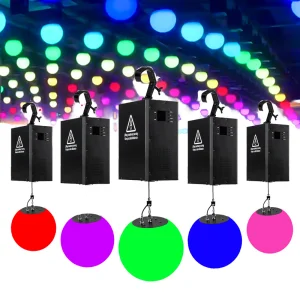
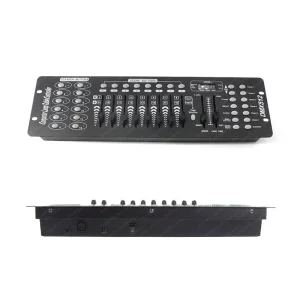
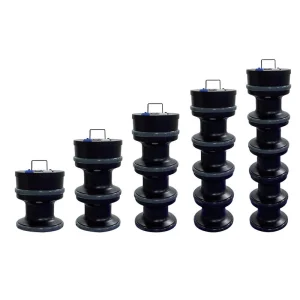
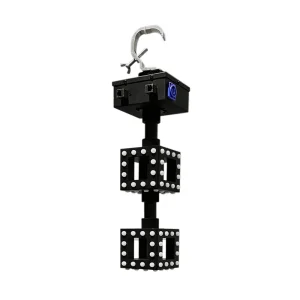
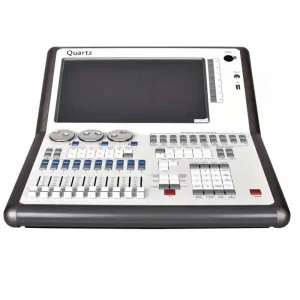
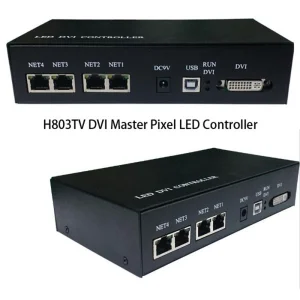
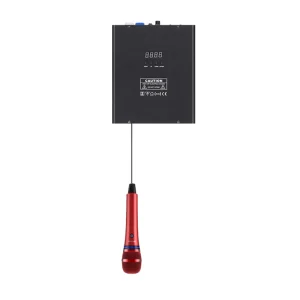
Explore our core kinetic structures and integrated hardware control systems designed for seamless software synchronization.
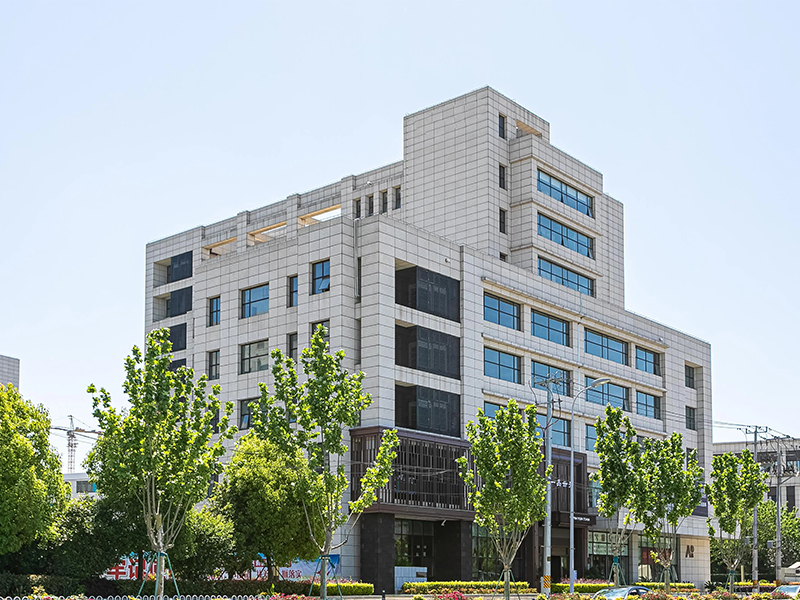
Founded in 2019 by the visionaries Mrs Ami Q and her husband Mr. Ahren Z in Guangdong Province, Xiaosan has grown to become an elite force in entertainment lighting technology. We operate a highly specialized 1000 square meter factory equipped with advanced production equipment, spearheaded by an expert R&D team dedicated to bridging the gap between embedded hardware and intelligent stage lighting design software.
With a dedicated roster of 30 experienced technical professionals, we deliver cutting-edge visual experiences for nightclubs, DJ discos, large concert stages, and multi-dimensional entertainment venues globally. Our core design competencies enable clients to map spatial light paths, design intricate sequences, and run heavy-duty rendering protocols with complete ease.
An authoritative analysis of semantic routing, real-time pixel control, and how OEM custom software drives the future of live performance architecture.
Deep DMX512, RDM, Art-Net, and sACN implementation at firmware levels. We ensure custom lighting hardware responds flawlessly to sub-millisecond network pulses.
Enabling stage designers to simulate complex moving fixtures, kinetic winch paths, and LED tube arrays within virtual 3D engines prior to field commissioning.
Integrating AI algorithms that translate real-time audio waveforms and music beats into dynamic, fluid light projections and coordinated physical kinetic movement.
In modern live entertainment architecture, stage lighting has evolved from static illumination to an immersive, interactive medium. Hardware consoles, while robust, are increasingly reliant on dynamic PC-based control suites and specialized software architectures. Platforms such as Madrix, TouchDesigner, Resolume, and proprietary DMX software engines represent the modern nervous system of show design.
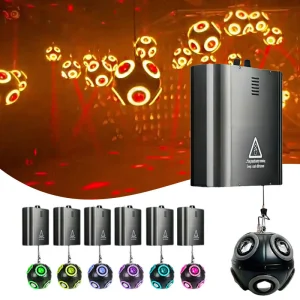
However, standard off-the-shelf control interfaces often fail to realize the unique properties of advanced fixtures—such as three-dimensional kinetic lighting winches, pixel-addressable 3D spheres, or complex custom-mapped LED tubes. Global lighting design firms and event producers demand customized OEM software solutions that seamlessly bridge lighting protocols (Art-Net, sACN) with physical hardware. This is where specialized OEM lighting factories play a vital role, engineering custom hardware/software handshakes that minimize control latency and maximize visual synchronicity.
Guangdong, China, stands as the global epicentre of stage lighting innovation and manufacturing. The concentration of component suppliers, PCB fabricators, and optical lens manufacturers within this region allows factories like Xiaosan to execute rapid manufacturing iterations.
This physical supply chain is matched by rapid software and firmware adaptation. While Western companies face extended developmental timelines when programming embedded chips for bespoke kinetic mechanisms, our local R&D environment is unified. Hardware design, surface mount technology (SMT) line runs, driver programming, and pilot tests against visualizers happen in a continuous, rapid-feedback loop.
Different venues dictate vastly different requirements for stage design control. For instance:
We are witnessing a major paradigm shift. Lighting software is no longer locked inside localized, isolated servers. It is moving towards cloud-based project templates, virtual pre-visualization (pre-viz), and generative AI mapping.
By designing control interfaces that dynamically hook into real-time rendering pipelines (such as Unreal Engine 5 or Notch), we allow lighting designers to program visual patterns and kinetic scripts from the comfort of their home offices. AI models are also being integrated to scan video backgrounds, automatically matching the mood, color temperature, and movement vectors of kinetic installations to on-screen video graphics without human programming.
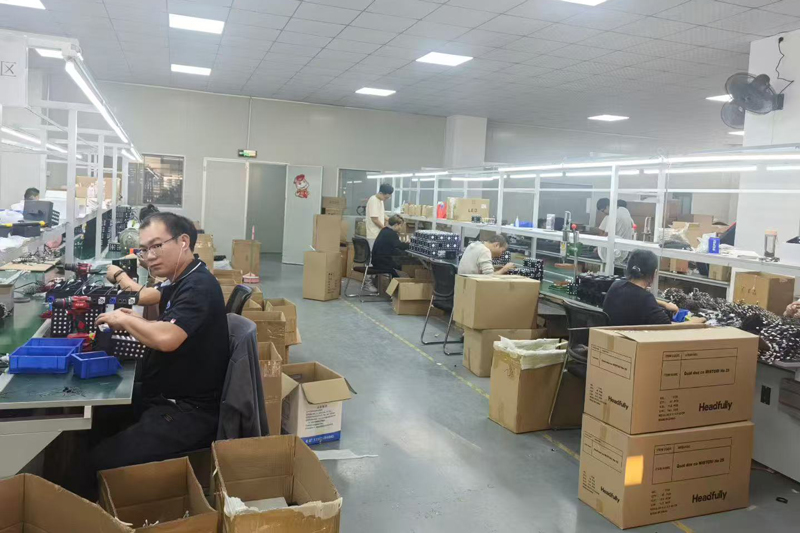
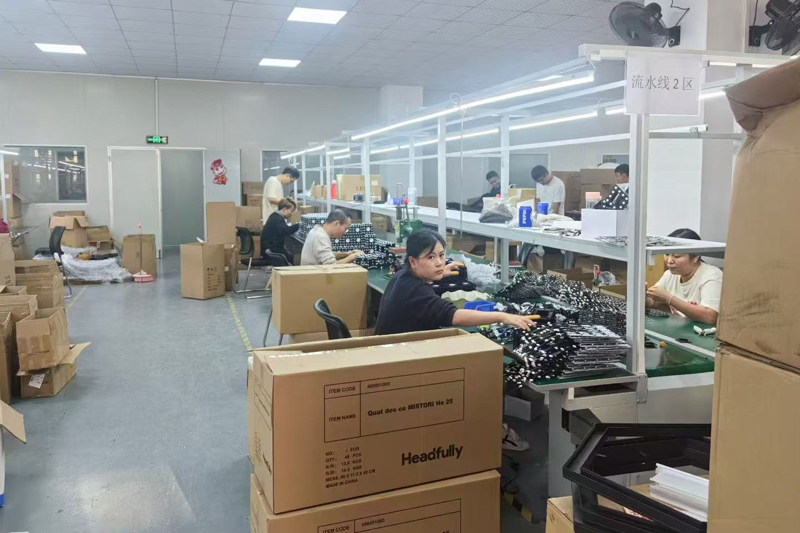
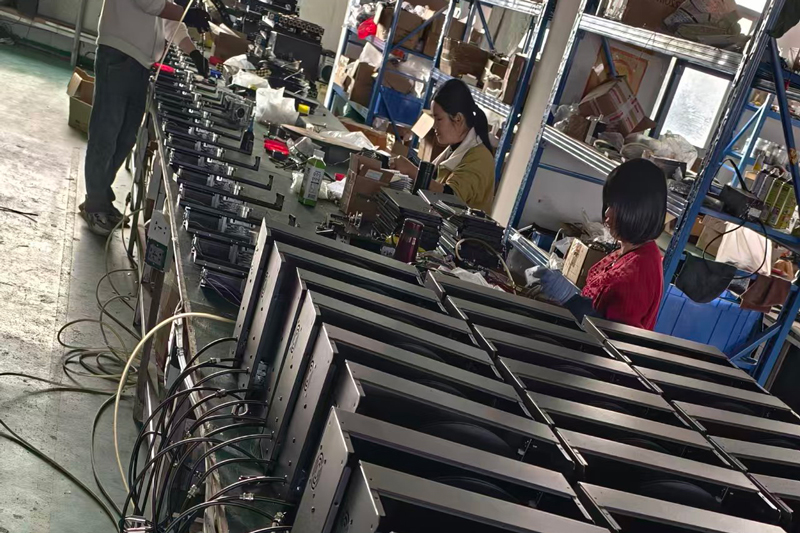
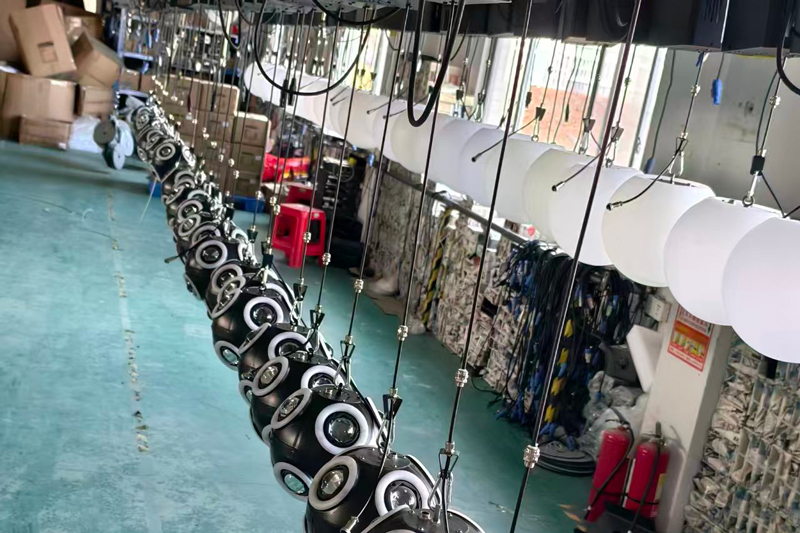
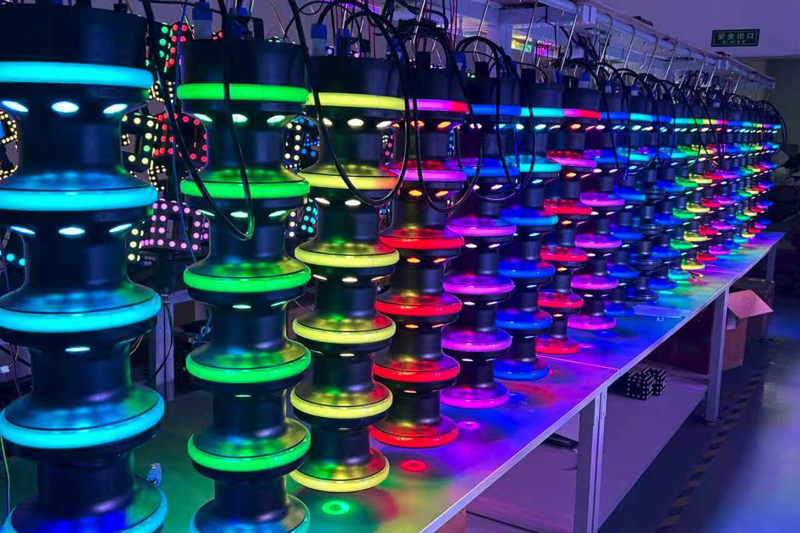
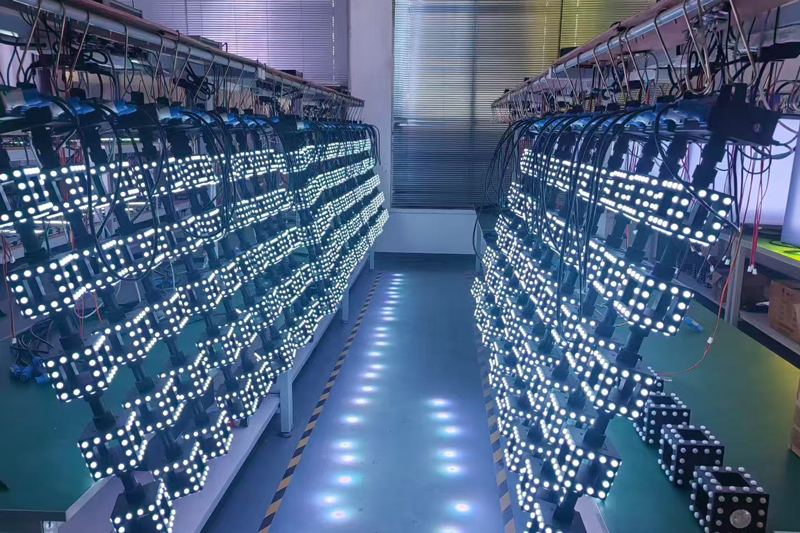
Inside our 1000m² manufacturing facility in Guangdong, where precision engineering meets rigorous QA protocols.
Clear, authoritative technical answers regarding our OEM services, software integration capabilities, and deployment procedures.
Integrate our high-performance controllers and specialized screen matrices to construct your bespoke lighting ecosystem.
 Xiaosan Light