China’s Stage Lighting Design sector is becoming more sophisticated, competitive, and internationally visible. Its companies now serve theatres, concert halls, television studios, museums, theme parks, and large cultural events. Their work combines optical engineering, control systems, architectural coordination, and creative storytelling. A good design must survive more than a showroom demonstration. It must remain stable under heat, dust, long rehearsals, and changing production demands.
Market data supports this momentum. Grand View Research reports continued growth in the global stage lighting market, driven largely by LED fixtures, intelligent control systems, and energy efficiency. Fortune Business Insights also identifies entertainment infrastructure and live-event investment as important market drivers. However, published estimates vary because researchers define “stage lighting” differently. That uncertainty deserves attention. A larger market figure does not automatically indicate better design quality.
Adolphe Appia, a major theatre lighting theorist, famously wrote, “Light is the soul of the theatre.” His idea still matters today. A moving beam can reveal a performer’s face, separate a singer from a dark backdrop, or make a small stage feel architectural. In China, leading companies are responding with brighter LED sources, quieter cooling systems, wireless control, and more precise color reproduction. Yet technical specifications alone cannot measure atmosphere, reliability, or collaboration. This overview examines ten notable Chinese Stage Lighting Design companies through those practical dimensions, while recognizing that rankings remain partly subjective. Performance evidence matters more than impressive brochures.
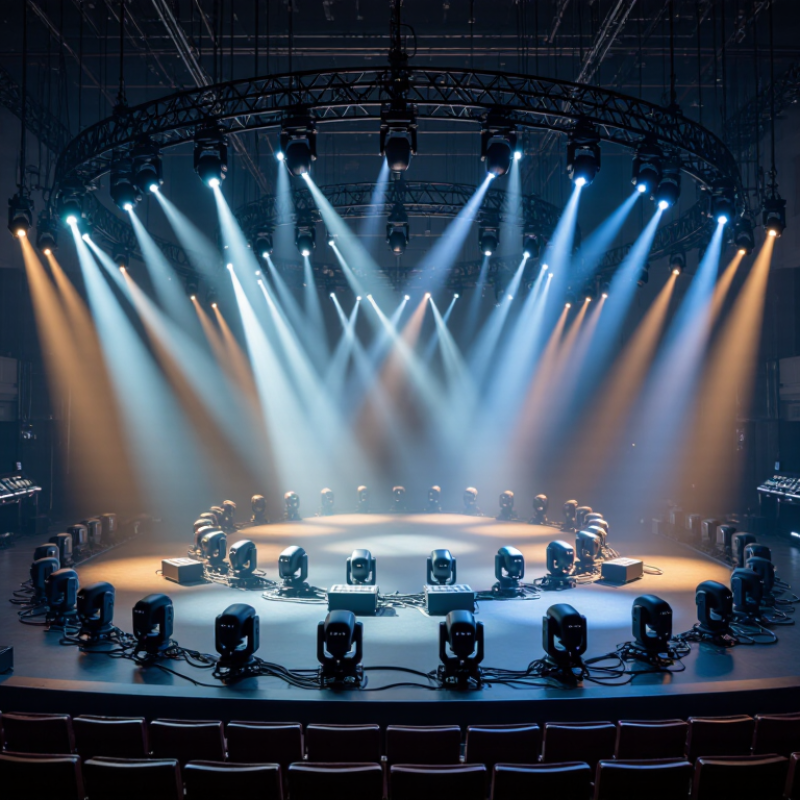
A leading stage lighting design company combines creative vision with measurable technical control. China’s Association of Performing Arts reported about 440,000 commercial performances in 2023, generating over RMB 20 billion in box office revenue. This scale raises expectations for reliable lighting systems. Strong designers study the venue before drawing a plot. They check sightlines, rigging points, power capacity, and audience distance. A practical team also tests color rendering, beam angles, flicker, and heat near performers.
Experience matters under pressure. During a live show, a failed fixture can disrupt an entire visual sequence. Professional companies therefore prepare backup units, signal redundancy, and clear emergency procedures. They understand DMX and RDM protocols, but they also communicate well with directors, electricians, and stage managers. The 2024 China Performance Market Annual Report highlighted continued growth in touring shows and immersive performances. These formats demand flexible programming, fast relocation, and precise control across unusual spaces.
Not every impressive design is a dependable one. I have seen visually ambitious plans overlook cable paths and maintenance access. That mistake becomes expensive after opening night. Leading teams document lux targets, power loads, fixture positions, and focusing notes. They should also explain why each effect exists, rather than adding movement for spectacle. Energy efficiency now deserves attention, although many project evaluations still treat it as secondary. The best company remains teachable, tests its assumptions, and leaves the venue safer and easier to operate.
China’s stage lighting design industry has changed from equipment-led contracting to experience-led creative planning. In earlier projects, many teams focused on brightness, fixture quantity, and installation speed. Today, designers study architecture, audience movement, camera framing, and energy use before drawing a lighting plot. A modern theater may combine warm side light, narrow beams, concealed fixtures, and programmable control. The result should support emotion, not simply fill the stage. This shift has helped Chinese firms compete for theaters, festivals, touring productions, and cultural venues at home and abroad.
The development also reflects stronger technical training. Designers now work with architects, directors, scenic teams, and safety engineers from the concept stage. They test focus positions in digital models, then adjust them onsite with light meters and mock performances. LED sources have reduced heat and power demand, while networked control allows precise cue changes. However, technical progress does not guarantee good design. Some projects still copy visual trends or add effects without a clear narrative purpose. That weakness deserves honest discussion.
For anyone comparing China’s top ten stage lighting design companies, evaluation should extend beyond product catalogs. Examine completed case studies, lighting calculations, maintenance records, accessibility planning, and responses during rehearsals. Reliable teams explain compromises clearly. They also document testing and provide practical training for operators. A successful design can make a singer’s face readable, preserve a dancer’s depth, and leave dark space for tension. Small details matter. Testing matters. The industry is developing quickly, but patience, original thinking, and measured evaluation will shape its next stage.
China’s Top 10 Stage Lighting Design Companies are often judged by more than attractive show photos.
Strong teams combine creative direction, lighting engineering, safety planning, and reliable site management. Their work may include concerts, theaters, exhibitions, cultural festivals, and large corporate events across China. The best designers understand how light changes a performer’s face, costume, and movement from every viewing angle.
A serious evaluation should examine ten practical areas:
Experienced teams usually provide detailed lighting plots, load calculations, focus plans, and rehearsal adjustments. They also test glare, shadows, camera exposure, and audience comfort.
Small details matter. A poorly focused fixture can weaken an otherwise excellent performance.
No ranking is perfect. Some companies have strong creative portfolios but limited regional support. Others deliver dependable engineering yet offer less original visual language. Site conditions can expose this gap quickly, especially in venues with low ceilings, reflective floors, or strict power limits.
A trustworthy shortlist should include verified project experience, qualified technicians, transparent quotations, and realistic delivery schedules. Client references and maintenance records deserve attention too.
Beautiful renderings are not enough. Lighting must work under pressure, during rehearsal, and throughout the final performance.
China’s leading stage lighting design companies provide more than fixture selection. Their services often begin with site surveys, audience studies, and a lighting concept matched to the venue’s architecture. Designers then prepare photometric plans, fixture schedules, control layouts, and budget estimates.
Practical work continues on site. Teams install moving lights, LED fixtures, followspots, dimming systems, and networked control consoles. Many projects use DMX, RDM, or Art-Net protocols for flexible programming and monitoring.
Designers also coordinate with set builders, sound engineers, rigging specialists, and broadcast crews. This reduces shadows, cable conflicts, and maintenance delays. It matters during live production.
Technology is becoming more measurable. Three-dimensional visualization helps clients review beam angles before installation. Some firms use energy-efficient LED systems, automated focus tools, and remote diagnostics. Others provide show programming, operator training, equipment rental, and long-term maintenance. These services support theaters, touring productions, cultural venues, television studios, and corporate events.
The “top 10” label needs caution. There is no universal ranking. Project records, safety procedures, technical documentation, and after-sales response offer better evidence. A supplier may design an impressive show, yet overlook service access or spare equipment. That is a real weakness. Clients should request drawings, testing records, warranty terms, and references from comparable venues. Experienced teams also explain limitations clearly, rather than promising perfect results.
Choosing a stage lighting design company in China requires more than comparing portfolios. Look for documented experience with theatres, concert halls, exhibitions, or touring productions similar to yours. Ask for drawings, lighting plots, photometric data, and commissioning records. A capable team should explain beam angles, color rendering, DMX or RDM control, rigging loads, and power distribution in clear language.
Visit a completed venue when possible. Watch how fixtures are focused, labeled, tested, and maintained. Request two or three client references, not only polished photographs. Ask about schedule changes, replacement parts, software support, and on-site response time. A strong company will discuss venue codes, electrical safety, fire requirements, and local installation procedures before proposing equipment. It should also provide a realistic budget with labor, transport, programming, testing, and future maintenance shown separately.
A perfect proposal does not exist. Some attractive portfolios hide weak coordination. I would treat missing technical details as a warning, not an automatic rejection. Ask the design team to create a small mock-up using your stage dimensions, sightlines, and control system. Compare shadows, skin tones, brightness, and fixture noise. The best partner listens when your brief changes and records each revision. Clear contracts matter too: define design ownership, delivery milestones, testing standards, training, and correction periods. If answers remain vague after several meetings, keep looking.
It should combine creative direction, lighting engineering, safety planning, and reliable site management. The lighting must suit performers and viewers from different angles.
Ask for lighting plots, equipment details, photometric data, load calculations, focus plans, and commissioning records. Clear drawings help prevent surprises.
Look for projects similar to yours, such as theatres or concerts. Visit a completed venue if possible, and speak with two or three former clients.
Check that labor, transport, programming, testing, and maintenance appear separately. A single total can hide important costs.
A small mock-up can reveal shadows, glare, uneven skin tones, or distracting fixture noise. Even good renderings may miss these issues.
Low ceilings, reflective floors, limited power, and audience sightlines can change fixture placement and brightness. Small details matter.
Ask how the team handles rigging loads, electrical safety, fire requirements, emergency planning, and local installation procedures. Answers should be specific.
Confirm access to replacement parts, software support, technician response, training, and maintenance records. Support can matter during a live show.
It should record design ownership, delivery milestones, testing standards, revisions, training, and correction periods. Vague terms invite confusion.
No. Some attractive portfolios may hide weak coordination. Missing technical details deserve questions, though they are not automatic grounds for rejection.
China’s stage lighting design industry has evolved from basic equipment supply into a professional field integrating creative planning, advanced technology, engineering, and production management. Leading companies are defined by their ability to transform artistic concepts into reliable lighting solutions for theaters, concerts, festivals, exhibitions, and other live events. Their strengths often include experienced design teams, strong project coordination, customized solutions, technical innovation, and consistent attention to safety, quality, and energy efficiency.
This overview introduces China’s top 10 stage lighting design companies through their capabilities, service quality, project experience, and technological development, without focusing on brand promotion. It also explains the key services offered by leading firms, such as lighting concept development, visual programming, system integration, equipment selection, installation guidance, and on-site support. When choosing a Stage Lighting Design company in China, clients should consider creative expertise, technical resources, communication efficiency, budget control, after-sales service, and the company’s ability to deliver solutions that match the venue, performance style, schedule, and production goals.

Xiaosan Light